The Definitive 90s Fashion Guide: Trends, Styling, and Where to Buy
A worn band tee paired with baggy jeans. Platform sneakers hitting the pavement. This is not a scene from 1996—it is what people wore yesterday. The 90s fashion revival has returned with full force, filling closets and social media feeds everywhere. This guide covers every essential trend, how to style it, and where to find authentic pieces.
Why 90s Fashion Rules Today
Fashion cycles run about 30 years. Gen Z searches thrift stores for original pieces while millennials revisit their childhood wardrobes. The appeal goes beyond nostalgia. 90s fashion offered distinct subcultures that let people express identity clearly. Grunge kids dressed nothing like hip-hop fans. Ravers looked alien next to preppy students. This diversity resonates with modern shoppers tired of algorithmic sameness. The secondhand clothing market grew 24% in 2023, with 90s-era items driving much of that demand.
Grunge Style Essentials
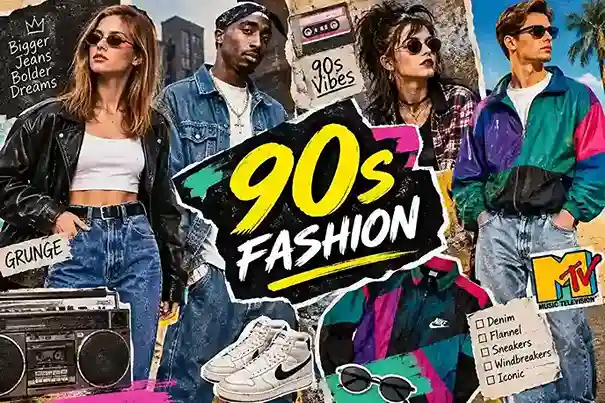
Seattle bands created a fashion rebellion by accident. Nirvana and Pearl Jam dressed for damp weather in flannel shirts, ripped jeans, and combat boots. Their utilitarian choices became the uniform of disaffected youth worldwide. Key pieces include oversized flannel worn open over band tees, distressed denim, and Dr. Martens boots. Marc Jacobs tried translating grunge for Perry Ellis in 1992 and got fired for his trouble. The look belonged to the street, not the runway. Wear one grunge element with clean basics to avoid looking costumey.
Hip-Hop Fashion Influence
Hip-hop transformed 90s fashion into serious business. Run-DMC convinced millions to buy Adidas sneakers. The Notorious B.I.G. made Coogi sweaters legendary. Tommy Hilfiger dressed Snoop Dogg and Aaliyah, linking preppy branding with street credibility. Cross Colours produced political streetwear. FUBU built an empire on community authenticity. Signature elements include oversized denim overalls with one strap undone, Timberland boots in wheat, and throwback sports jerseys. Gold chains and bamboo earrings completed the look. These styles now command premium prices on resale platforms.
Minimalist Slip Dresses
Not all 90s fashion screamed for attention. Calvin Klein championed clean lines while Kate Moss wore slip dresses with leather jackets and simple sandals. Her off-duty uniform launched endless imitations. Carolyn Bessette-Kennedy mastered luxury minimalism, mixing designer pieces with Gap basics. Her simple silk wedding dress by Narciso Rodriguez influenced bridal fashion permanently. Modern interpretations include bias-cut skirts, camisole tops, and slip dresses layered over t-shirts. Colors stay neutral—black, white, oatmeal, and navy. These pieces shift from day to night with a shoe change.
Denim in the 90s
The decade treated denim as essential. Overalls in light wash appeared on everyone. Jorts reached knee length as skaters and hip-hop fans adopted looser fits. Britney Spears and Justin Timberlake wore matching denim-on-denim to the 2001 American Music Awards, cementing the Canadian tuxedo in pop culture. Levi’s, Guess, and Gap fought for market dominance. Vintage 501 jeans now sell for premium amounts online. Wear overalls with a fitted turtleneck or simple tank for modern balance.
Chunky Footwear Comeback
Footwear pursued bulk without apology. Buffalo platform sneakers added six inches to Spice Girls fans. Fila Disruptors, originally from 1996, found new life with a younger generation. Jelly sandals came in glitter-filled and scented varieties despite causing blisters. Dr. Martens 1460 boots maintained consistent popularity for three decades. The brand paired perfectly with floral dresses for the classic 90s hard-soft contrast. Dad sneakers returned through Balenciaga and trickled down to every footwear brand.
Iconic 90s Accessories
Accessories defined the era as much as clothing. Choker necklaces stretched around necks in plastic, velvet, and tattoo-style mesh. Butterfly clips sectioned hair into tiny buns. Scrunchies accumulated on wrists and ponytails. Tiny matrix sunglasses framed faces with narrow rectangles. Bucket hats, bandanas, and body glitter completed looks across subcultures. Frosted lip gloss and blue eyeshadow represented the beauty side. These small pieces let you reference the decade without committing to a full outfit.
Plaid Across Subcultures
Plaid saturated every corner of 90s fashion. Grunge musicians wore it as flannel. Cher Horowitz elevated it to prep-school perfection in matching blazer-skirt sets. Britney Spears paired a tied white shirt with a plaid skirt for her iconic video. Hot Topic sold plaid bondage pants to alternative crowds. The pattern coded as rebellious or refined depending on styling. A fitted plaid blazer reads academic now. An oversized shirt tied at the waist references grunge. Context matters entirely.
Rave and Club Kid Looks
Underground parties created a separate fashion vocabulary. Ravers wore wide-leg pants, tiny tops, and comfortable sneakers for hours of dancing. Neon colors helped spot friends in dark warehouses. Pacifiers hung from beaded necklaces for practical reasons. Club kids in New York pushed boundaries with vinyl, fake blood, and homemade costumes. The smiley face became linked to both acid house culture and Nirvana merchandise. Modern festival fashion draws directly from these 90s rave aesthetics.
Preppy Clueless Style
Amy Heckerling’s 1995 film created the definitive preppy 90s fashion document. Costume designer Mona May dressed Alicia Silverstone in matching plaid sets, knee-high socks, and designer pieces. The yellow plaid skirt suit remains recognizable decades later. Gap sold khakis to suburban teens. Polo Ralph Lauren represented East Coast aspiration. The aesthetic relied on coordination—matching sets, intentional color palettes, and polished details. Style the modern version with tailored blazers over pleated skirts and loafers.
Windbreakers and Tracksuits
Athletic wear crossed into streetwear permanently during the 90s. Adidas, Nike, and Reebok sold tracksuits to athletes and hip-hop fans alike. Color-blocked windbreakers with oversized fits defined the look. Starter jackets indicated NBA team loyalty and now sell for significant amounts as vintage pieces. Velour tracksuits gained prominence later in the decade. Modern athleisure owes everything to this era. The line between athletic and everyday clothing blurred and never recovered.
Styling 90s Fashion Now
Choose one 90s element per outfit to avoid Halloween costume territory. Let a vintage piece anchor while modern basics ground everything in the present. Vintage Levi’s work with a contemporary fitted sweater. A slip dress layered over a white t-shirt looks current with clean sneakers. Platform boots add edge to simple jeans-and-tee combinations. Pay attention to proportion differences—90s fashion ran looser and longer. Tailoring vintage finds creates custom fits that honor the original while serving your current style.
Finding Authentic Vintage
Quality beats fast-fashion reproductions every time. Thrift stores like Goodwill and Salvation Army receive constant donations. Check beyond main sections into sleepwear and activewear for hidden gems. Depop features strong 90s curation from Gen Z sellers. eBay offers broad selection with buyer protections. The RealReal authenticates luxury vintage pieces. Estate sales often yield original band tees and worn-in denim at lower prices. The hunt itself becomes enjoyable when you know where to look.
Frequently Asked Questions
What defined 90s fashion most?
Subcultural fragmentation defined the decade. Grunge, hip-hop, rave, preppy, and minimalist aesthetics coexisted simultaneously. Each group wore different brands and listened to different music. The common thread was anti-establishment attitude and rejection of 80s excess. Casual comfort replaced power dressing across the board.
Are 90s trends wearable for work?
Tailored blazers from the minimalist movement work beautifully for offices. Wide-leg trousers in quality fabrics reference 90s proportion while meeting dress codes. Slip dresses layer under blazers for business casual. Avoid distressed pieces and graphic tees for professional contexts.
How do I spot authentic vintage 90s clothing?
Check garment tags first. Paper union labels indicate pre-2000s production. “Made in USA” designations point to older manufacturing. Single-stitch hems on t-shirts typically date to the 90s. YKK zippers with specific style numbers help authenticate denim and outerwear pieces.
What shoes complete a 90s outfit?
Dr. Martens 1460 boots, Adidas Superstars, and Converse Chuck Taylors provide versatile foundations. Platform sneakers from Buffalo add height. Jelly sandals work for casual summer. Chunky loafers reference preppy aesthetics. Choose one style matching your outfit’s subculture reference.
Who were the biggest 90s fashion icons?
Kate Moss defined minimalist style. Kurt Cobain became grunge’s reluctant face. Aaliyah bridged tomboy and glamour. TLC brought colorful hip-hop fashion mainstream. Winona Ryder offered goth-adjacent looks. Gwen Stefani combined ska, punk, and glam influences uniquely.
Can men wear 90s fashion authentically?
Baggy jeans with fitted tops avoid costume territory. Flannel shirts over plain tees remain practical. Retro Nike, Adidas, and New Balance sneakers provide authentic flavor. Windbreakers function as light outerwear. Balance proportions by keeping tops fitted when pants run loose.
Conclusion
Major retailers now stock wide-leg jeans where skinny cuts once dominated. Platform soles replace slim sneakers on display walls. Slip dresses and flannel shirts share rack space as complementary choices. This 90s fashion revival differs from previous nostalgia cycles because it spans every subculture at once. The decade offers grunge authenticity, hip-hop confidence, minimalist elegance, and rave freedom simultaneously. You get to choose which version fits your identity. Walk into a thrift store, grab a flannel, and make the decade your own.