90s Fashion: Iconic Trends, Outfits, Brands & Style Guide
What Made 90s Fashion So Memorable?
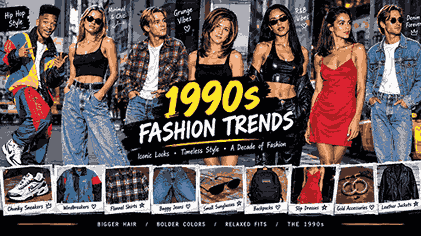
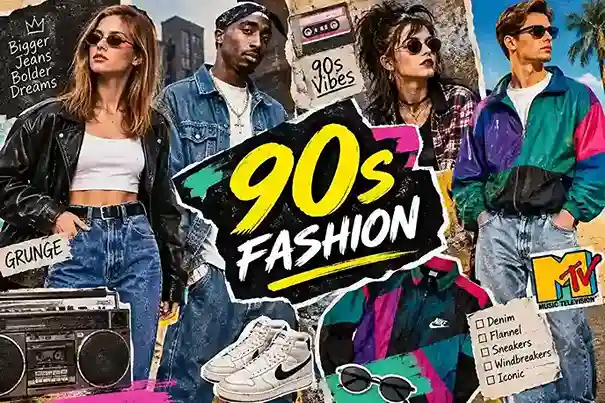
The 1990s created a striking mix of casual clothing, rebellious street style, minimalist dressing, sportswear, and glamorous designer looks. 90s fashion moved between oversized jeans and fitted slip dresses, grunge layers and polished minimalism, making the decade remarkably diverse. If you want to understand why those looks still influence wardrobes today, this guide breaks down the key trends, clothing, colors, accessories, brands, and styling ideas that defined the era.
What Was 90s Fashion?
90s fashion refers to the clothing, accessories, silhouettes, designers, and cultural styles associated with the 1990s. Rather than having one single appearance, the decade contained several major movements that developed at different times.
The early 1990s favored casual clothing and grunge influences, while minimalism became increasingly important. Later, sportswear, logo-heavy clothing, retro references, glamorous designer pieces, and more polished casual outfits gained attention. The Fashion Institute of Technology describes the decade through themes including minimalism, grunge, deconstruction, avant-garde design, retro revivals, technology, environmentalism, and globalization.
This variety is one reason 90s style remains easy to adapt. You can create a relaxed outfit from jeans and a simple top or build a more polished look around a slip dress, tailored jacket, or minimalist accessories.
How Did 90s Fashion Change During the Decade?
The decade did not have one fixed trend. Its style changed considerably from the early 1990s to the late 1990s.
| Period | Major Style Direction | Common Clothing | Overall Feel |
| Early 1990s | Grunge and casualwear | Flannel shirts, loose jeans, boots, oversized tops | Relaxed and rebellious |
| Early–mid 1990s | Minimalism | Slip dresses, simple tops, clean tailoring | Simple and refined |
| Mid 1990s | Youth and pop culture | Mini skirts, fitted tops, casual dresses | Playful and youthful |
| Mid–late 1990s | Sportswear and streetwear | Hoodies, tracksuits, caps, sneakers | Athletic and casual |
| Late 1990s | Logo and designer influence | Branded tops, denim, tailored casualwear | Polished and expressive |
| Late 1990s | Retro and bohemian influences | Low-rise denim, crop tops, mixed fabrics | Eclectic and relaxed |
The Museum at FIT notes that the decade was marked by overlapping influences rather than a single uniform style.
Why Was Grunge So Important to 90s Style?
Grunge became one of the most recognizable elements of 90s fashion. Its roots were connected to the music scene of the Pacific Northwest, where practical, worn, layered clothing became part of the visual identity.
Typical pieces included:
- Flannel shirts
- Loose or distressed jeans
- Simple T-shirts
- Knit sweaters
- Beanies
- Heavy boots
- Layered tops
- Oversized outerwear
The style was deliberately casual rather than polished. The Fashion History Timeline records how grunge moved from everyday youth clothing into mainstream fashion and eventually appeared on high-fashion runways, including Marc Jacobs’ 1993 Perry Ellis collection.
For a modern interpretation, focus on layering and relaxed proportions instead of trying to make every piece look artificially old.
How Did Minimalism Define 90s Clothing?
Minimalism provided a strong contrast to the excess associated with the previous decade. Clean lines, neutral colors, simple silhouettes, and understated styling became important parts of 90s fashion.
Popular minimalist pieces included:
- Slip dresses
- Straight-leg trousers
- Simple tank tops
- Plain T-shirts
- Streamlined blazers
- Long skirts
- Neutral coats
- Simple leather accessories
The Museum at FIT identifies minimalist design as one of the major forces of early-1990s fashion and connects its popularity with a broader reaction against the extravagance of the 1980s.
Minimalism also explains why many 1990s-inspired outfits still look current: simple shapes are easy to combine without relying on excessive decoration.
What Were the Most Popular 90s Fashion Trends?
Several trends became particularly recognizable during the decade.
1. Baggy Jeans
Loose denim became an important casual choice, especially when paired with oversized tops, simple T-shirts, or casual jackets.
2. Slip Dresses
The slip dress became one of the defining minimalist silhouettes of the decade. It could appear casual when layered over a basic shirt or more polished when styled on its own.
3. Flannel Shirts
Flannel became closely associated with grunge and worked especially well as a relaxed layering piece.
4. Cargo Pants
Cargo pants represented the decade’s interest in practical, utilitarian clothing and became increasingly visible in casual wardrobes.
5. Crop Tops
Short tops became increasingly popular toward the latter part of the decade and were frequently paired with denim or casual trousers.
6. Hoodies
The hoodie became a key part of casual and sports-inspired wardrobes.
7. Denim
Jeans remained a dependable everyday staple throughout the decade, appearing in multiple fits and styling approaches.
8. Logos
Branded clothing became increasingly visible during the decade, particularly in casualwear. Tommy Hilfiger and other major labels helped establish logo-focused styles.
9. Sportswear
Tracksuits, athletic jackets, sneakers, baseball caps, and basketball-inspired clothing connected music, sport, and everyday street style.
10. Preppy Clothing
Khaki trousers, Oxford shirts, blazers, and polished casualwear remained important, particularly in the later part of the decade.
What Did 90s Outfits Look Like?
The best 90s fashion outfits usually combined a few recognizable pieces rather than using every trend at once.
Casual 90s Outfit
Try:
- Relaxed jeans
- Plain T-shirt
- Open flannel shirt
- Sneakers
- Simple cap
Minimalist 90s Outfit
Try:
- Slip dress
- Simple jacket
- Small shoulder bag
- Minimal jewelry
- Clean shoes
Grunge-Inspired Outfit
Try:
- Loose denim
- Graphic T-shirt
- Flannel shirt
- Chunky boots
- Knit beanie
Sporty Outfit
Try:
- Track jacket
- Relaxed trousers
- Basic T-shirt
- Sneakers
- Baseball cap
Preppy Outfit
Try:
- Khaki trousers
- Oxford shirt
- Knit sweater
- Simple sneakers or loafers
These combinations capture the decade without requiring a head-to-toe costume.
What Colors Were Popular in 90s Fashion?
The decade used a surprisingly broad color palette.
Neutral Colors
Black, white, gray, beige, navy, and brown were especially useful for minimalist outfits.
Earthy Colors
Olive, khaki, rust, cream, and muted brown worked well with grunge and utilitarian styling.
Stronger Colors
Bright red, blue, yellow, green, and purple appeared in sportswear, pop-inspired outfits, and statement pieces.
Denim Blue
Denim remained one of the decade’s most recognizable visual elements and could be worn casually or incorporated into more coordinated outfits.
The important point is that there was no single official 1990s color palette. The decade’s different subcultures and fashion movements created very different approaches to color.
Which Accessories Defined 90s Style?
Accessories completed many 90s fashion outfits and often added personality to otherwise simple clothing.
Popular choices included:
- Small shoulder bags
- Baseball caps
- Beanies
- Chokers
- Hoop earrings
- Simple sunglasses
- Hair clips
- Backpacks
- Watches
- Platform shoes
- Sneakers
- Chunky boots
Accessories also helped distinguish different style groups. A small shoulder bag could support a minimalist look, while a cap and sneakers could push an outfit toward sportswear.
How Did Music Influence 90s Fashion?
Music was one of the strongest cultural forces behind 1990s clothing. Grunge shaped casual styling, while hip-hop influenced sportswear, oversized silhouettes, caps, jackets, and sneakers. Britpop also helped revive elements of earlier mod-inspired dressing.
This relationship worked both ways. Musicians became style references, while fashion brands increasingly drew inspiration from music scenes and youth culture.
The result was a decade in which clothing could communicate a person’s musical interests, social group, and attitude without requiring formal fashion rules.
How Did Designers Shape 90s Fashion?
The decade produced an unusual combination of minimalism, experimentation, luxury, and street influence.
Important designers and labels associated with the period include:
- Calvin Klein
- Jil Sander
- Marc Jacobs
- Anna Sui
- Helmut Lang
- Prada
- Gucci
- Versace
- Vivienne Westwood
- Jean Paul Gaultier
- Tom Ford
- Martin Margiela
The Museum at FIT’s 1990s exhibition specifically highlights minimalism, grunge, deconstruction, avant-garde fashion, retro revival, technology, reuse, and globalization as major themes.
Museum collections also document how designers such as Vivienne Westwood and Tom Ford used historical references, sensual styling, branding, and spectacle in ways that helped define the decade.
What Were the Most Recognizable 90s Fashion Brands?
Several brands became strongly associated with different sides of 1990s style.
| Brand/Label | Associated Style | Notable Direction |
| Calvin Klein | Minimalism | Clean, understated clothing |
| Tommy Hilfiger | Casualwear | Logos, denim, preppy sportswear |
| Ralph Lauren | Preppy | Shirts, chinos, classic American styling |
| Prada | Minimalism and experimentation | Refined, modern silhouettes |
| Gucci | Luxury and glamour | Sensual late-1990s styling |
| Versace | Bold glamour | Body-conscious and dramatic designs |
| Marc Jacobs | Grunge | High-fashion interpretation of grunge |
| Anna Sui | Alternative fashion | Eclectic and youth-oriented styling |
| Helmut Lang | Minimalism | Utilitarian and streamlined designs |
| Vivienne Westwood | Punk and historical references | Provocative, theatrical design |
These labels represented different fashion directions rather than one unified aesthetic.
How Did 90s Fashion Influence Men’s Style?
Men’s clothing became increasingly casual during the decade. Jeans, untucked shirts, oversized tops, sportswear, hoodies, caps, and casual jackets were widely visible.
Grunge introduced flannel shirts, relaxed denim, sweaters, and boots. Hip-hop influenced athletic clothing, larger silhouettes, caps, jackets, and basketball-inspired pieces. Meanwhile, preppy clothing continued through Oxford shirts, khakis, blazers, and classic knitwear.
A typical late-1990s casual outfit could combine relaxed jeans or khakis with a plain T-shirt, an overshirt, and sneakers.
How Did 90s Fashion Influence Women’s Style?
Women’s clothing moved across several contrasting directions. Minimalist slip dresses and clean tailoring existed alongside grunge layers, casual denim, crop tops, mini skirts, sportswear, and increasingly expressive designer pieces.
The decade also saw the continued influence of supermodels and the emergence of new fashion personalities. The Fashion History Timeline describes the early 1990s as the peak period for the supermodel phenomenon, while later trends shifted toward more individual and understated forms of styling.
This mixture gave women considerable freedom to move between polished, casual, sporty, rebellious, and glamorous looks.
How Can You Recreate 90s Fashion Today?
You do not need an entirely vintage wardrobe. Start with a few recognizable pieces and combine them with modern basics.
Simple Formula
Step 1: Choose a decade-inspired foundation such as relaxed denim, a slip dress, cargo trousers, or a simple T-shirt.
Step 2: Add one recognizable accessory, such as a cap, small shoulder bag, beanie, or simple sunglasses.
Step 3: Choose footwear that supports the look, such as sneakers, boots, or simple casual shoes.
Step 4: Keep the outfit balanced. If one piece is oversized, pair it with a simpler or more structured item.
Step 5: Avoid adding every 1990s trend at once. One or two strong references usually create a more natural result.
The goal is to capture the character of the era while making the outfit comfortable and practical today.
90s Fashion vs. 80s and 2000s Fashion
Understanding the differences between neighboring decades makes 90s fashion easier to recognize.
| Feature | 1980s | 1990s | Early 2000s |
| General mood | Bold and energetic | Casual, varied, minimalist | Playful and experimental |
| Silhouettes | Strong shoulders, volume | Relaxed and streamlined | Fitted and low-rise |
| Denim | Often high-waisted | Multiple relaxed and straight fits | Low-rise became prominent |
| Sportswear | Bright and oversized | Casual and street-focused | Highly visible |
| Branding | Increasing | Major casualwear influence | Very prominent |
| Accessories | Statement-heavy | Simple to expressive | More playful |
| Key influences | Pop, power dressing | Music, youth culture, minimalism | Pop culture and technology |
The 1990s acted as a bridge between the dramatic excess of the 1980s and the more digitally influenced style environment of the early 2000s.
Why Is 90s Fashion Still Popular?
The continued interest comes from the decade’s flexibility. Many pieces associated with the era—denim, T-shirts, sneakers, hoodies, simple dresses, jackets, and casual trousers—are practical outside of a historical fashion context.
There is also a strong archival foundation for the decade. The Museum at FIT has documented numerous 1990s garments and designers, while the Fashion History Timeline provides detailed research into how everyday clothing, music, designers, and cultural movements shaped the period.
Modern interest does not have to reproduce the decade exactly. Instead, people can borrow its silhouettes, layering techniques, and attitude while creating a contemporary outfit.
What Are the Most Important 90s Fashion Pieces?
If you want a compact wardrobe inspired by the decade, begin with versatile items.
Core clothing:
- Relaxed jeans
- Plain T-shirts
- Flannel shirt
- Simple sweatshirt
- Slip dress
- Cargo trousers
- Denim jacket
- Track jacket
- Basic sweater
- Casual blazer
Useful accessories:
- Baseball cap
- Beanie
- Small shoulder bag
- Simple sunglasses
- Hoop earrings
- Minimal necklace
- Backpack
Footwear:
- Classic sneakers
- Casual boots
- Loafers
- Platform-style shoes
These pieces can create multiple outfits without turning your wardrobe into a costume collection.
90s Fashion Style Checklist
Use this checklist when creating a decade-inspired outfit:
- Relaxed or simple silhouette
- Denim or another casual staple
- One recognizable 1990s accessory
- Simple layering
- Comfortable footwear
- Limited branding
- A clear style direction
- Colors that work together
- One statement piece rather than many
- Modern fit and comfort
The strongest looks usually have a clear idea behind them rather than combining every trend from the decade.
Frequently Asked Questions About 90s Fashion
What was the most popular fashion in the 90s?
There was no single dominant style. Grunge, minimalism, denim, sportswear, preppy clothing, hip-hop-inspired streetwear, and designer fashion all played major roles.
What are typical 90s outfits?
Typical outfits include relaxed jeans with T-shirts and flannel shirts, slip dresses with simple layers, cargo trousers with casual tops, and sportswear paired with sneakers.
What colors were popular in the 90s?
Black, white, gray, beige, navy, khaki, olive, denim blue, and various bright colors all appeared during the decade. Color choices depended heavily on the specific style or subculture.
Is 90s fashion coming back?
Yes, many 1990s-inspired silhouettes and garments continue to appear in contemporary styling. Their simple construction and versatile nature make them easy to reinterpret.
What shoes were popular in the 90s?
Sneakers, boots, loafers, platform shoes, and other casual footwear were widely associated with different 1990s styles. The appropriate choice depended on whether the outfit was grunge, preppy, sporty, minimalist, or glamorous.
How can I dress in 90s style without looking outdated?
Choose one or two recognizable elements and combine them with current basics. Relaxed denim, a simple T-shirt, a vintage-inspired jacket, and modern sneakers can create a subtle 1990s reference without making the outfit look like a costume.
Final Thoughts on 90s Fashion
90s fashion remains compelling because it was never limited to one formula. It gave space to grunge, minimalism, sportswear, streetwear, preppy clothing, designer experimentation, and retro influences, creating a decade with remarkable variety.
The best way to use 1990s inspiration today is to understand the original ideas and then make them your own. Start with one authentic-looking piece, build around it with comfortable basics, and let your personal style guide the final outfit.