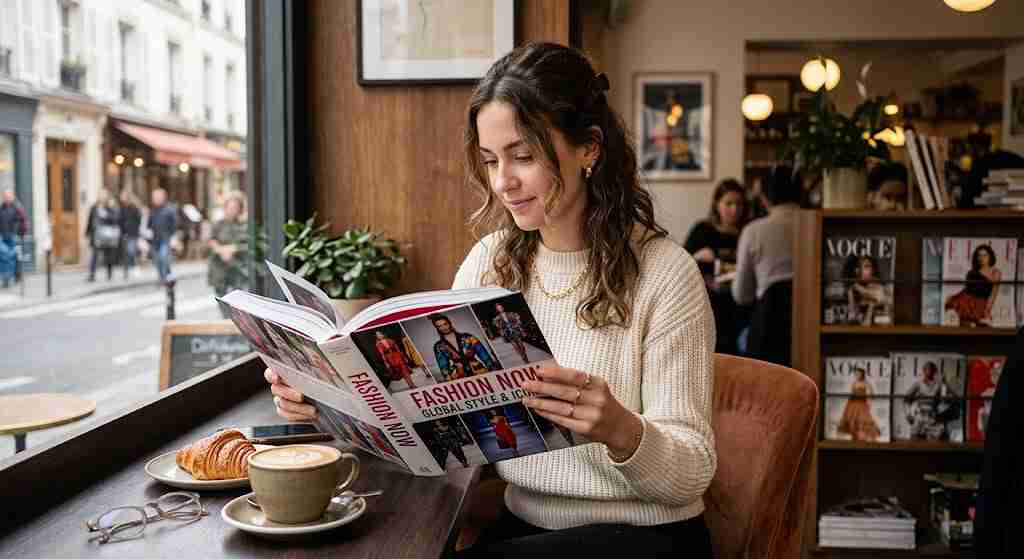
Reading About Fashion: The Complete Guide to Style, History & Trends
Fashion can look simple until you start asking why people dress the way they do, where trends come from, and how clothing reflects culture. Reading About Fashion gives you the context behind the clothes, helping you understand style rather than simply follow it.
Whether you are a beginner, student, fashion enthusiast, designer, shopper, or content creator, the right information can sharpen your eye. This guide explains fashion history, trends, textiles, designers, personal style, cultural influences, and practical ways to study fashion with reliable sources.
What Does Reading About Fashion Actually Mean?
Reading About Fashion means learning about clothing and style through books, museum collections, articles, interviews, historical records, fashion magazines, and other reliable material.
It goes beyond asking what is popular. You learn why a silhouette became important, how fabrics changed, how designers influenced style, and how clothing connected with society.
The Library of Congress distinguishes fashion and style from clothing and costume by noting that fashion generally refers to forms of dress that become popular for a shorter period, while clothing and costume can be tied more strongly to an era, place, or social group.
Why Is Reading About Fashion Important?
Reading About Fashion helps you see patterns that are easy to miss when you only look at individual outfits.
It can help you:
- Understand fashion history
- Recognize recurring trends
- Learn about influential designers
- Understand fabrics and textiles
- Explore cultural dress
- Improve personal styling decisions
- Develop fashion vocabulary
- Research fashion more accurately
- Understand the fashion business
- Build stronger creative ideas
Fashion also provides historical evidence. Museums preserve garments, accessories, textiles, photographs, and other objects that show how people dressed and how styles changed.
The V&A’s fashion collection, for example, spans five centuries and includes garments ranging from seventeenth-century gowns to twentieth-century couture.
How Has Fashion Changed Through History?
One of the most valuable parts of Reading About Fashion is discovering that today’s styles rarely exist in isolation.
Fashion changes through technology, social movements, economics, politics, entertainment, migration, and cultural exchange. A new style may also revive an older idea rather than create something completely new.
The Library of Congress notes that clothing has been influenced by social and cultural developments, including war, politics, migration, retail changes, catalogs, and the growth of recognizable clothing brands.
A Simple Fashion Timeline
| Period | Major Fashion Characteristics | What to Study |
|---|---|---|
| Ancient societies | Regional dress and practical textiles | Materials and culture |
| Medieval period | Social status shaped clothing | Class and symbolism |
| 1700s | Elaborate silhouettes and textiles | Dressmaking and status |
| 1800s | Industrial production and changing silhouettes | Textile technology |
| Early 1900s | New silhouettes and modern dress | Social change |
| 1920s–1940s | Youth culture, practicality and changing women’s fashion | Lifestyle |
| 1950s–1960s | Couture, youth fashion and new retail culture | Designers and mass fashion |
| 1970s–1990s | Subcultures and strong individual styles | Music and identity |
| 2000s–2020s | Digital influence and rapid trend cycles | Social media and global fashion |
| Today | Blending of vintage, contemporary and cultural influences | Personal expression |
This timeline is a starting point rather than a complete history. Fashion developed differently across regions, communities, and cultures.
What Can You Learn From Fashion History?
Fashion history is not simply a list of old dresses. It can reveal how people lived, worked, celebrated, traveled, and expressed identity.
Reading About Fashion historically allows you to connect garments with their original circumstances.
For example, researchers can examine:
- Silhouettes
- Sewing techniques
- Fabric choices
- Embroidery
- Color
- Accessories
- Manufacturing methods
- Social status
- Cultural traditions
- Changing ideas about beauty and identity
The Met’s Costume Institute contains more than 33,000 objects representing seven centuries of fashionable dress and accessories, giving researchers an extensive material record of fashion history.
How Do Fashion Trends Start?
A fashion trend can begin through many different routes. Designers, musicians, celebrities, communities, retailers, street style, films, social platforms, and cultural movements can all influence what becomes popular.
But popularity does not automatically make something historically important.
When Reading About Fashion trends, ask three questions:
- Where did the style come from?
- Why did people respond to it?
- How did it change as more people adopted it?
This approach produces a much clearer understanding than simply collecting lists of “trending” clothes.
How Do You Read a Fashion Outfit?
You do not need professional training to analyze an outfit.
Start with the basic visual elements:
1. Silhouette
Look at the overall shape of the garment. Is it loose, fitted, structured, flowing, short, long, layered, or oversized?
2. Fabric
Consider whether the material appears lightweight, heavy, textured, shiny, smooth, woven, knitted, or embroidered.
3. Color
Notice the dominant color and how different shades work together.
4. Details
Look for buttons, collars, sleeves, stitching, prints, embroidery, pleats, pockets, trims, and other details.
5. Accessories
Ask where and when the outfit would normally be worn. A garment designed for a formal occasion communicates something different from everyday clothing.
Shoes, bags, jewelry, hats, scarves, and other accessories can completely change the message of an outfit.
6. Context
Which Fashion Topics Are Worth Reading?
If you want a strong foundation, organize your learning into connected topics instead of jumping randomly between trend articles.
| Topic | What You Learn | Useful Search Ideas |
|---|---|---|
| Fashion history | How styles developed | Fashion history by decade |
| Fashion design | How garments are created | Fashion design basics |
| Textiles | Fabrics and production | Textile types and techniques |
| Designers | Creative influence | Famous fashion designers |
| Personal style | Dressing with intention | Personal style guide |
| Cultural dress | Regional clothing traditions | Traditional dress history |
| Accessories | Finishing elements | History of handbags and footwear |
| Fashion business | Retail and branding | Fashion industry basics |
| Sustainable fashion | Environmental and production concerns | Sustainable clothing |
| Fashion photography | Visual storytelling | Fashion photography history |
| Fashion media | Magazines and digital publishing | Fashion journalism |
The Library of Congress maintains research material covering subjects such as fashion history, designers, ready-to-wear clothing, footwear, textiles, women’s clothing, and fashion merchandising.
Where Should Beginners Start Reading About Fashion?
Beginners should start with broad, trustworthy material before moving into highly specialized subjects.
A useful progression is:
Fashion basics → history → textiles → designers → cultural dress → trends → industry → personal style
Museums are especially useful because they allow you to study actual garments and objects rather than relying only on descriptions.
The V&A’s collection covers five centuries of fashion and includes clothing, shoes, hats, and other accessories, making it a valuable starting point for visual research.
How Can You Tell If a Fashion Source Is Reliable?
Good fashion research needs more than attractive photographs and confident writing.
Before trusting a source, check:
- Who wrote it?
- Does the author have relevant expertise?
- Is the information supported by evidence?
- Does the page identify its sources?
- Is the information updated when necessary?
- Is the organization reputable?
- Does the article separate fact from opinion?
- Can important claims be checked elsewhere?
Institutional collections are particularly useful for historical research because they document physical objects and provide collection information.
For example, the Library of Congress offers fashion research guides and digital collections, while museums such as the V&A and The Met maintain extensive fashion collections.
What Role Do Textiles Play in Fashion?
You cannot fully understand fashion without understanding fabric.
Textiles influence how clothing looks, feels, moves, and performs. They also affect construction methods and the final appearance of a garment.
Important textile terms include:
- Cotton
- Silk
- Wool
- Linen
- Velvet
- Lace
- Denim
- Knitwear
- Embroidery
- Printed textiles
- Woven textiles
The V&A’s textile collection contains more than 75,000 individual objects or sets spanning more than 5,000 years, including woven, printed, embroidered, lace, tapestry, and carpet examples.
How Does Culture Influence Fashion?
Clothing can communicate belonging, tradition, profession, celebration, status, and identity.
That makes cultural dress an important part of fashion research. A respectful approach focuses on the history and meaning of garments rather than treating traditional clothing as a temporary trend.
The Met and V&A collections demonstrate that fashion history extends beyond a single period or style tradition, with collections covering garments and textiles from different regions and cultures.
How Does Fashion Connect With Art and Design?
Fashion shares many principles with other creative fields.
Designers work with:
- Shape
- Proportion
- Color
- Texture
- Balance
- Repetition
- Contrast
- Movement
A garment can therefore be studied as both clothing and a designed object.
The Met has described fashion exhibitions through the lens of artistic and technical achievement, while its Costume Institute preserves garments as objects that help explain the development of fashion across time.
How Can Reading Improve Your Personal Style?
Reading About Fashion does not mean copying every look you see.
Instead, it can help you understand why particular combinations work for you. Once you understand proportion, color, texture, fabric, and context, you can make more informed clothing choices.
Try this simple method:
- Save outfits you genuinely like.
- Identify what they have in common.
- Note colors, fabrics, shapes, and details.
- Separate temporary trends from styles you repeatedly enjoy.
- Experiment with your existing wardrobe.
- Develop your own visual vocabulary.
The goal is not to follow every trend. It is to become more intentional about what you choose to wear.
How Should You Study Current Fashion Trends?
Current trends move quickly, so avoid treating one social-media post as proof that something is universally popular.
Instead, compare several types of evidence:
- Runway collections
- Retail collections
- Street style
- Fashion journalism
- Museum research
- Designer interviews
- Cultural developments
- Consumer behavior
Reading About Fashion becomes more useful when you compare sources instead of accepting the first trend prediction you encounter.
What Is the Best Way to Build Fashion Knowledge?
Create a simple fashion-learning system.
Week 1: Fashion History
Choose one decade or historical period and learn its major silhouettes, fabrics, designers, and social influences.
Week 2: Textiles
Learn how common fabrics are produced and how their properties affect clothing.
Week 3: Designers
Choose several designers and study their signature ideas, techniques, and historical influence.
Week 4: Personal Style
Analyze your own wardrobe and identify the colors, shapes, fabrics, and combinations you enjoy most.
Keep notes as you learn. A small digital notebook can become your personal fashion reference library.
The Best Primary Sources for Fashion Research
For serious Reading About Fashion, prioritize organizations that preserve and document fashion history.
Victoria and Albert Museum: Its fashion collection spans five centuries and includes garments, accessories, and extensive textile holdings.
The Metropolitan Museum of Art: Its Costume Institute preserves more than 33,000 objects representing seven centuries of fashionable dress and accessories.
Library of Congress: Its research guides and digital collections provide material on clothing, fashion history, designers, textiles, accessories, and the fashion industry.
These sources are valuable because their information connects to documented collections, research, archives, and institutional expertise.
What Should You Avoid When Reading About Fashion?
Not every fashion article deserves your attention.
Be cautious with content that:
- Makes extreme claims without evidence
- Treats one trend as universal
- Copies information without attribution
- Uses outdated information as current fact
- Gives no author or source information
- Focuses entirely on clicks rather than useful information
- Presents personal opinion as historical fact
Strong fashion content should leave you knowing something you did not know before.
Fashion Reading: Quick Reference Table
| If You Want To Learn About… | Start With… |
|---|---|
| Fashion history | Historical timelines and museum collections |
| Designers | Designer biographies and museum archives |
| Fabrics | Textile collections and textile guides |
| Trends | Current fashion reporting plus historical context |
| Cultural clothing | Museum collections and cultural research |
| Personal style | Color, proportion, silhouette and wardrobe analysis |
| Fashion careers | Design, merchandising, journalism and business resources |
| Fashion photography | Historical fashion photography collections |
| Sustainable fashion | Material, production and consumption research |
| Fashion terminology | Clothing dictionaries and specialist references |
Frequently Asked Questions
What is Reading About Fashion?
Reading About Fashion means studying clothing, style, designers, textiles, trends, culture, history, and the fashion industry through reliable written and visual sources.
Why should I read about fashion?
It helps you understand the reasons behind styles and trends. You can develop stronger fashion knowledge instead of simply following what is popular.
What should beginners read first?
Start with fashion history and basic clothing terminology. Then move into textiles, designers, cultural dress, trends, and personal style.
Is fashion history useful today?
Yes. Many modern styles reference earlier periods, and historical knowledge helps explain why certain silhouettes, fabrics, and design ideas return.
Where can I find reliable fashion information?
Museum collections and established research institutions are excellent starting points. The V&A, The Met, and Library of Congress all provide substantial fashion resources.
Can reading about fashion improve personal style?
Yes. Learning about color, proportion, silhouette, textiles, and styling can help you make more informed and individual clothing choices.
Final Thoughts
Reading About Fashion is ultimately about learning to look beyond the surface. A dress, suit, scarf, shoe, or textile can carry information about design, technology, culture, history, business, and personal expression.
Start with one period, one designer, one textile, or one garment that genuinely interests you. Then keep asking better questions. The more carefully you read and observe, the easier it becomes to understand fashion—and the more confidently you can develop your own perspective on it.